Effective Dog Waste Management: Tips for a Cleaner Environment
Introduction:
If you’re a dog owner in the United States, you already know that having a furry best friend comes with some not-so-glamorous responsibilities. One of the biggest? Dealing with dog waste. Whether you have a tiny Chihuahua or a full-grown Golden Retriever, proper dog waste management is something every pet owner needs to take seriously.
And it’s not just about keeping your yard looking clean. Dog poop is actually a significant environmental and public health concern. The Environmental Protection Agency (EPA) classifies dog waste as a pollutant — placing it in the same category as toxic chemicals and oil spills when it comes to water pollution. That’s a fact that surprises a lot of people.
In this guide, we’ll walk you through everything you need to know about managing dog waste the right way — from daily pickup habits and safe disposal methods to eco-friendly alternatives and when it makes sense to hire a professional pet waste removal service.
Why Dog Waste Management Matters More Than You Think
A lot of dog owners assume that leaving poop in the yard is harmless — maybe even good for the grass. However, spoiler alert: it’s not. In fact, dog feces is one of the most overlooked environmental hazards in American neighborhoods.
The Health Risks of Dog Waste
Dog poop carries a long list of harmful bacteria and parasites that can make both humans and other animals seriously sick. Some of the most common pathogens found in dog feces include:
- E. coli — causes stomach cramps, diarrhea, and vomiting
- Salmonella — can infect both humans and other pets
- Campylobacter — a leading cause of food poisoning in the US
- Giardia — a parasite that causes severe digestive illness
- Roundworms and hookworms — can survive in soil for years and infect humans through skin contact
Children who play in yards or parks where dog waste has been left behind are especially vulnerable. These parasites don’t just stay where the poop lands — they spread through soil, water runoff, and even the air when waste dries out.
Dog Waste and Environmental Pollution
Here’s something most people don’t know: dog poop is not fertilizer. Unlike cow manure, dog feces has too much nitrogen and acidity. Leaving it on your lawn can actually burn and kill grass, leaving yellow or brown patches behind.
Worse, when it rains, bacteria and parasites from dog waste wash into storm drains, streams, and local water bodies. This is a major contributor to water pollution across the United States — especially in suburban neighborhoods with high dog populations. Studies have found that up to 30% of bacteria in urban waterways can be traced back to dog waste.

Daily Dog Waste Management — Building Good Habits
The foundation of good dog waste management is simple: pick it up promptly, every single time. To begin with, here’s how to build a solid routine.
Always Pick Up Right Away
The longer dog waste sits, the more it dries out, spreads bacteria, and becomes harder to remove. Make it a rule to pick up immediately after your dog goes — whether you’re in your backyard or out on a walk.
Use the Right Dog Waste Bags
Not all dog poop bags are created equal. Here’s what to look for:
- Thickness — thin bags tear easily and lead to messy accidents
- Size — make sure the bag is big enough for your dog’s breed
- Biodegradable dog waste bags — a great eco-friendly option (more on this below)
- Scented vs. unscented — a personal preference, but scented bags can help mask odors on walks
Always carry extra bags. Otherwise, running out mid-walk is the number one excuse people give for leaving waste behind — but it’s one that’s easy to avoid.
Set Up a Dog Waste Station in Your Yard
If you have a backyard, setting up a dedicated dog waste station makes the whole process much easier. A basic setup includes:
- A dog waste bin or sealed container
- A bag dispenser mounted nearby
- A pooper scooper tool for hands-free pickup
Having everything in one place removes the friction from the routine and makes it more likely you’ll actually do it consistently.
Safe and Proper Dog Waste Disposal Methods
Picking up dog poop is step one. However, disposing of it properly is step two — and this is where, unfortunately, a lot of people go wrong.
Trash Bin Disposal (Most Common Method)
The most widely accepted method in the US is bagging dog waste and placing it in your regular household trash. This is perfectly safe and sanitary as long as you use a tied, sealed bag. Most American municipalities allow this.
Tips for trash disposal:
- Always double-bag if your bags are thin
- Tie the bag tightly before throwing it away
- Don’t leave filled bags sitting in the sun — dispose of them the same day
Dog Waste Composting
Yes, you can compost dog poop — but not in your regular compost bin. Dog waste composting requires a dedicated system that reaches high enough temperatures to kill pathogens. Therefore, there are specially designed dog waste composters available that make this process safe and manageable.
Important: never use dog waste compost on vegetable gardens or food-producing plants. It’s safe only for ornamental plants and non-edible landscaping.
Dog Waste Digesters (In-Ground Systems)
A dog waste digester is a small in-ground system that works like a mini septic tank for pet waste. Basically, you install it in your yard, add enzyme tablets, and the dog waste breaks down naturally into the soil — as a result, it does so safely and without odor.
These systems are:
- Low-maintenance
- Environmentally friendly
- Great for homeowners who want a permanent yard solution
They do require proper installation and are best suited for yards with good drainage.
Flushing Dog Waste
The EPA actually recommends flushing dog poop down the toilet as one of the safest disposal methods. Wastewater treatment plants are designed to handle fecal matter — including pet waste. Just make sure you’re not flushing the plastic bag along with it. Use flushable dog waste bags or scoop the waste directly.
Eco-Friendly Dog Waste Disposal Options
As more Americans become environmentally conscious, the demand for greener dog waste management solutions has grown significantly. Here are some sustainable options worth considering.
Biodegradable Dog Waste Bags
Switching to biodegradable dog waste bags is one of the easiest eco-friendly swaps you can make. These bags are made from plant-based materials that break down much faster than traditional plastic. Look for bags certified by the Biodegradable Products Institute (BPI) to make sure they meet real composting standards.
Pet Waste Composting Services
Some cities and private companies now offer pet waste composting pickup — similar to regular composting services. In addition, they collect dog waste separately and process it in industrial composting facilities designed to handle pathogens safely.
Solar-Powered Dog Waste Digesters
These newer systems use solar energy to speed up the digestion process in-ground. They’re a premium option but produce zero waste and zero carbon footprint — ideal for eco-conscious dog owners.
Dog Waste Management for Apartments and Urban Living
Living in an apartment or urban area comes with its own unique dog waste challenges. For example, you may not have a private yard, and as a result, you’re sharing spaces with neighbors and the broader community.
Always Carry Bags on Walks
In most US cities, there are leash laws and pet waste ordinances that require dog owners to pick up after their pets in public spaces. Fines for not complying can range from $50 to $250 depending on your city. Always carry bags whenever you leave the house with your dog.
Use Public Dog Waste Stations
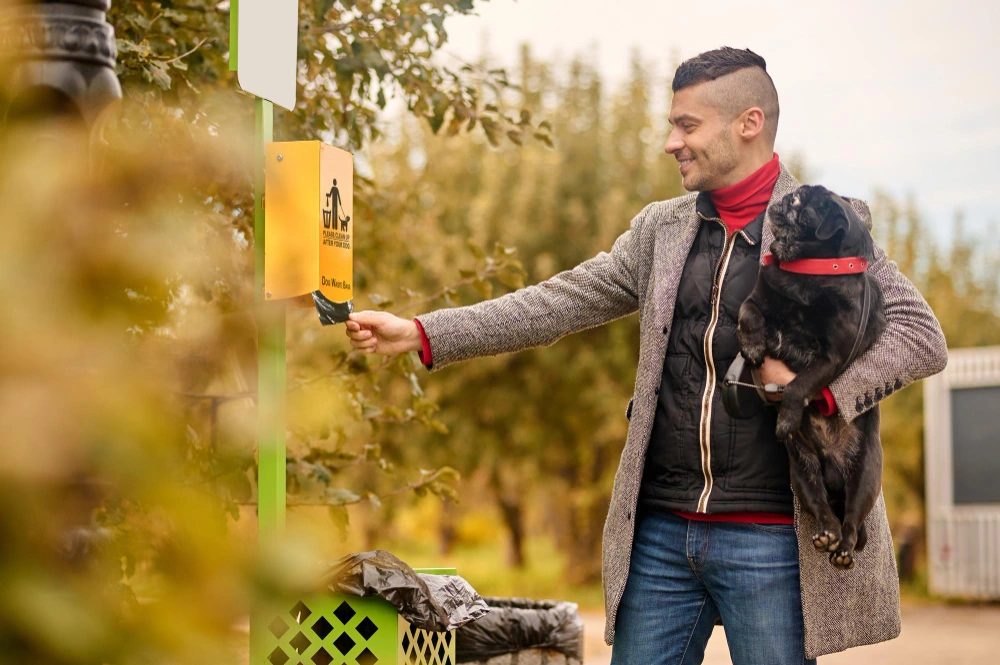
Many parks, apartment complexes, and HOA communities now have dog waste stations installed — dispensers that provide free bags and a dedicated bin for disposal. If your apartment complex or community doesn’t have one, it’s worth requesting one from your property manager.
Dog Waste Laws and Regulations in the US
Most US cities and states have pet waste ordinances in place. While the specific rules vary by location, the general principle is the same: you are legally responsible for picking up after your dog in public spaces. Some jurisdictions also have regulations about how close to water sources you can dispose of pet waste. It’s worth checking your local city or county regulations to stay compliant.
Managing Dog Waste for Multiple Dogs
If you have more than one dog, waste management can feel overwhelming — especially in warmer months when the smell becomes an issue fast.
How Often Should Dog Waste Be Removed?
As a general rule of thumb:
- 1 dog — pick up daily or every other day
- 2-3 dogs — daily pickup is recommended
- 4+ dogs — twice daily may be necessary
The bigger your pack, the faster waste accumulates — and the faster bacteria and odors spread.
Dealing with Dog Waste Odor in the Yard
Even after picking up regularly, odors can linger — especially in warm weather. Here are some effective odor control strategies:
- Enzyme-based yard sprays — break down organic matter and neutralize odors naturally
- Lime powder — sprinkled lightly on problem areas to neutralize odors
- Regular hosing down — dilutes any residue left behind
- Designated potty areas — training your dogs to use a specific spot makes cleanup easier and contains the smell
When to Hire a Professional Dog Waste Removal Service
Sometimes life gets busy, mobility is limited, or you simply don’t want to deal with it. In these situations, professional pet waste removal services — commonly known as pooper scooper services — come in to help.
What Is a Pooper Scooper Service?
A pooper scooper service is a professional dog waste cleanup company that visits your home on a scheduled basis — weekly, bi-weekly, or monthly — and removes all dog waste from your yard. Many services also sanitize the area after cleanup.
These services are incredibly popular across the US, particularly in suburban communities, and the industry has been growing at a compound annual growth rate of nearly 9% in recent years.
Benefits of Hiring a Dog Waste Removal Service
- Saves you time and effort
- Keeps your yard consistently clean and safe
- Reduces your family’s exposure to harmful bacteria
- Great for seniors, people with disabilities, or busy households
- Many services offer affordable subscription plans
How to Choose the Right Pet Waste Removal Company
When shopping for a dog waste removal service near you, look for:
- Licensed and insured companies
- Transparent pricing with no hidden fees
- Flexible scheduling — weekly, bi-weekly, or one-time cleanups
- Good online reviews on Google and Yelp
- Eco-friendly disposal practices
Many companies also offer first-time discounts or free yard assessments, so don’t be afraid to ask.
Dog Waste Management for HOAs and Property Managers
If you manage an apartment complex, HOA community, or commercial property that allows pets, dog waste management is a shared responsibility — and a common source of neighbor complaints.
Installing Dog Waste Stations
One of the most effective solutions is installing dog waste bag dispenser stations throughout your property. For instance, these stations provide bags and a disposal bin in a single unit, thereby making it easy and convenient for residents to clean up after their pets.
Best practices for placement:
- Near building entrances and exits
- Along walking paths and dog-friendly areas
- Near green spaces or grassy areas where dogs typically go
Implementing a Pet Waste Policy
A clear, written pet waste policy in your lease agreement or HOA rules sets expectations from day one. For example, it should include:
- Requirement to pick up waste immediately
- Designated pet relief areas
- Consequences for non-compliance (warnings, fines)
- Availability of waste stations on the property
Quick Tips for Better Dog Waste Management at Home
Let’s wrap up with a quick-reference list of the best practices every US dog owner should follow: To summarize,
- Pick up dog waste immediately — don’t let it sit
- Use biodegradable dog waste bags whenever possible
- Never leave dog poop on lawns, sidewalks, or public spaces
- Dispose of waste in a tied bag in your trash, or flush it
- Consider a dog waste digester for a permanent yard solution
- Set up a dedicated waste station in your backyard
- Use enzyme sprays to control odor between cleanups
- Check your local pet waste ordinances to stay legal
- If you have multiple dogs or a busy schedule, consider a professional pooper scooper service
- Wash your hands thoroughly after handling dog waste — always
Conclusion:
Dog waste management isn’t the most glamorous topic, but it’s one of the most important responsibilities that comes with being a dog owner in the United States. From protecting your family’s health and keeping your lawn green, to preventing water pollution in your community, how you handle dog poop has a real impact on the world around you.
The good news? With the right habits, tools, and — when needed — a little professional help from a pet waste removal service, it doesn’t have to be a big deal. Build a simple routine, invest in the right supplies, and stay consistent. Your yard, your neighbors, and your local waterways will all thank you.