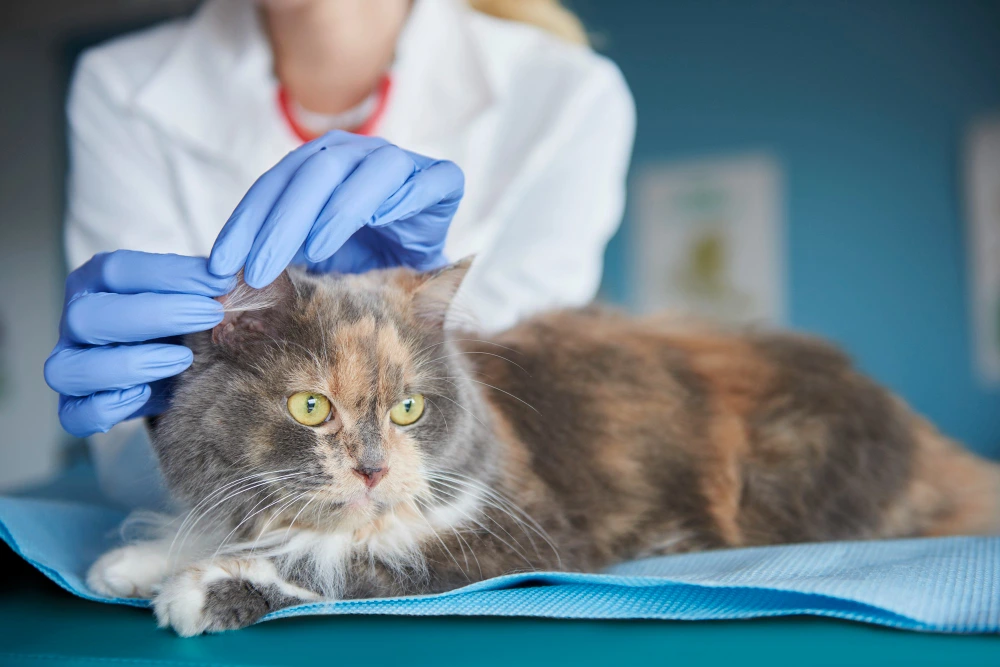
Recognizing Cat Hyperthyroidism Symptoms: A Pet Owner’s Guide
If your senior cat has suddenly become a bottomless pit at mealtime but is somehow losing weight, hyperthyroidism could be the reason. This guide walks you through the most common cat hyperthyroidism symptoms, why they happen, and what to do if you spot them so you can get your cat the right care before complications set in.
What Are Cat Hyperthyroidism Symptoms and What Causes Them?
Hyperthyroidism in cats happens when the thyroid gland produces too much thyroid hormone, sending the body’s metabolism into overdrive. In most cases, it’s caused by a benign (non-cancerous) tumor on the thyroid gland — true thyroid cancer is rare, accounting for less than 3% of feline cases.
This condition is most common in middle-aged to older cats, particularly those over the age of 7, and is considered the most frequently diagnosed hormonal disorder in senior cats. The average age of onset is around 13 years. There’s no strong breed predisposition, though some research suggests non-Siamese breeds and indoor cats may carry slightly elevated risk — but age remains by far the dominant factor.
Why Recognizing Symptoms Early Matters
Left untreated, hyperthyroidism doesn’t just cause discomfort it can lead to serious secondary problems like heart disease, high blood pressure, and even sudden blindness from retinal detachment. The good news: when caught early, hyperthyroidism in cats is highly manageable, and most cats go on to live full, comfortable lives with treatment. Cats that receive appropriate treatment can have a life expectancy comparable to that of a healthy senior cat.

Early Cat Hyperthyroidism Symptoms to Watch For
Because the early signs of hyperthyroidism in cats often develop gradually, they’re easy to mistake for normal aging. Here’s what tends to show up first:
- Subtle, gradual weight loss despite eating normally
- A slightly duller or unkempt coat
- Mild restlessness or increased vocalization, especially at night
- Slightly increased thirst or urination
These early-stage changes are often so gradual that owners only notice them in hindsight, once more obvious signs appear. This is exactly why routine senior wellness bloodwork — even in cats that seem perfectly healthy — is so valuable for catching the disease before it progresses.
Cat Hyperthyroidism Weight Loss
Weight loss is one of the hallmark cat hyperthyroidism symptoms — and often the first thing owners notice. It happens because excess thyroid hormone speeds up metabolism dramatically, causing the body to burn through calories far faster than normal.
This symptom confuses many pet parents because it usually happens alongside a normal or increased appetite, not a decreased one. A cat eating more than usual while still losing weight should always prompt a vet visit. In advanced cases, this can progress to visible muscle wasting (cachexia).
Hyperthyroid Cat Increased Appetite
A hyperthyroid cat’s increased appetite (sometimes called polyphagia) is the metabolic flip side of the weight loss described above. As the body’s energy demands rise, cats often become noticeably more food-driven — begging more, finishing meals faster, or seeming “hungry all the time” in a way that feels out of character.
Paired with weight loss, this symptom strongly points to a metabolic cause rather than a dietary one. In some cats, the pattern can flip as the disease progresses — appetite drops, signaling advanced disease or a complication.
Excessive Thirst in Cats With Hyperthyroidism
Increased thirst and urination (polydipsia and polyuria) are also common signs of hyperthyroidism in cats. As metabolism accelerates, cats often drink more water and use the litter box more frequently. If you’ve noticed yourself refilling the water bowl more often, or scooping a noticeably wetter litter box, it’s worth mentioning to your vet alongside any other changes you’ve observed.
This symptom overlaps with other conditions common in older cats, like kidney disease and diabetes, which is one reason proper testing matters (more on that below).
Behavior Changes Among Cat Hyperthyroidism Symptoms
Hyperthyroidism doesn’t just affect the body — it can noticeably change how a cat acts. Common behavioral signs include:
- Hyperactivity or restlessness
- Increased vocalization, particularly yowling at night
- Irritability or new aggression
- Anxiety or a generally “on edge” demeanor
Interestingly, a smaller subset of hyperthyroid cats show the opposite pattern — becoming unusually lethargic, withdrawn, or apathetic. This atypical presentation is less common but worth knowing about, since it can delay diagnosis if owners are only watching for hyperactivity.
Other Physical Signs to Watch For
Beyond the core symptoms above, hyperthyroidism can produce several other physical signs:
- Poor, greasy, or unkempt coat condition
- Vomiting or diarrhea
- Rapid heart rate (tachycardia) or a detectable heart murmur
- Increased fecal volume
- An enlarged thyroid gland, sometimes felt as a small lump in the neck
- Increased respiratory rate or labored breathing in advanced cases
Heart and Blood Pressure Complications
One of the most important things for cat owners to understand is that hyperthyroidism is rarely “just” a metabolic issue — it puts real strain on the cardiovascular system.
Thyrotoxic Heart Disease
As thyroid hormone levels stay elevated, the heart has to work harder and faster to keep up with the body’s increased demands. Over time, this can cause the heart muscle to thicken, a condition known as hypertrophic cardiomyopathy. In some cats, this shows up as a heart murmur during a routine physical exam — often the first clue something is wrong, even before other symptoms are obvious. The encouraging news is that this type of heart disease is frequently reversible once the underlying hyperthyroidism is treated.
High Blood Pressure (Hypertension)
Roughly 1 in 5 hyperthyroid cats develops hypertension, either at diagnosis or sometimes after treatment begins — which is why ongoing blood pressure monitoring matters even after a cat starts therapy. In severe cases, hypertension can cause bleeding in the eyes or retinal detachment, leading to sudden blindness. Like cardiac changes, hypertension is often reversible with appropriate management, but it sometimes requires its own dedicated medication alongside hyperthyroidism treatment.
Kidney Disease Overlap
Chronic kidney disease and hyperthyroidism frequently occur together in older cats, and each can mask or complicate the other. Hyperthyroidism can artificially boost kidney function on bloodwork by increasing blood flow to the kidneys, meaning underlying kidney disease sometimes isn’t apparent until after thyroid treatment begins. This is one of the key reasons vets run comprehensive panels rather than testing thyroid levels in isolation.
How Are Cat Hyperthyroidism Symptoms Diagnosed?
If your vet suspects hyperthyroidism, diagnosis typically involves:
- Physical exam – checking the neck for an enlarged thyroid gland and listening for heart rate or rhythm changes
- T4 blood test – measuring total thyroxine levels, the primary diagnostic marker
- Additional bloodwork – assessing kidney function, liver enzymes, and overall organ health, since kidney disease often coexists with hyperthyroidism
- Blood pressure check – to screen for hypertension, since it’s common both before and after treatment
- Further testing if needed – in roughly 5–10% of cases where T4 comes back normal despite clear symptoms, vets may order a free T4 test, T3 suppression test, or thyroid scintigraphy (imaging) to clarify the diagnosis
What Causes Cat Hyperthyroidism Symptoms to Develop?
In the vast majority of cases, hyperthyroidism is caused by a benign growth (adenoma or hyperplasia) on one or both lobes of the thyroid gland — about 70% of cats have both lobes affected. Despite extensive research, veterinarians haven’t pinpointed a single definitive cause. Current thinking points to a multifactorial origin, with age as the strongest known risk factor, alongside possible contributions from diet, environmental chemical exposure, and genetics.
Are Untreated Cat Hyperthyroidism Symptoms Fatal?
Yes — without treatment, hyperthyroidism is progressive and ultimately fatal. An accelerated metabolism strains the heart, often causing thickened heart muscle, high blood pressure, and eventually congestive heart failure — leading to fluid buildup and breathing difficulty. With treatment, this is preventable, and most cats regain a normal life expectancy.
Living With a Hyperthyroid Cat: Monitoring at Home
Once your cat starts treatment, a few simple habits at home can help you and your vet track progress:
- Weigh your cat monthly using a home scale or at vet visits to confirm weight stabilizes
- Watch appetite and water intake for a return to more normal levels
- Note energy and mood changes — many owners report their cat becomes calmer and more affectionate once hormone levels normalize
- Keep up with recheck bloodwork as recommended by your vet, since thyroid levels and kidney function need periodic reassessment, especially in the months after starting treatment

When to See a Vet
Schedule a vet visit if your cat shows any combination of:
- Weight loss despite a normal or increased appetite
- Increased thirst or urination
- Restlessness, irritability, or excessive vocalizing
- A rough or greasy coat
- Vomiting or diarrhea that doesn’t resolve
- A new heart murmur or rapid breathing
FAQs:
How long can a cat with hyperthyroidism live?
4 to 8+ years or more….
Can a cat recover from hyperthyroidism?
Yes, hyperthyroidism in cats is highly treatable and often permanently cured.
Is hyperthyroidism painful for cats?
Hyperthyroidism itself is generally not painful.
What are the final stages of hyperthyroidism in cats?
Severe emaciation, congestive heart failure, dangerously high blood pressure causing sudden blindness, and organ failure.
How to naturally treat hyperthyroidism in cats?
Dietary iodine restriction or holistic herbal support.